A wide region makes possible a varied gastromony, that is able to satisfy the most refined palates. If in their origins these dishes were perfect for a cold climate and could be considered as "heavy" because of their taste and their amount of calories, nowadays they hava been toned down so that they have got some prestige among the gastronomy amateurs. Hunt, fishing, farm and shepherding animals, legumes, mushrooms, bread, garlic, tomato, pepper, etc., are the base of this gastronomy. It is necessary to add the riders that la Mancha conquense offers, where excelent cheeses and good soups, and white, red and rosé wines are included.
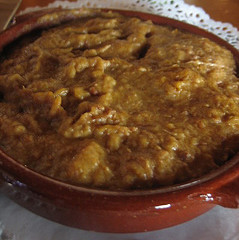
Morteruelo
Morteruelo is a stew made with pig liver (and sometimes other types of meat like back from pig, chicken, rabbit, etc are added), spices and breadcrumbs, all that crashed in a mortar for the result to be a paste.

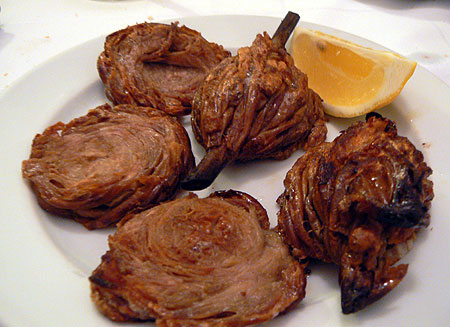
Zarajos
Zarajos are considered an appetizer (or even a "tapa") very typical and traditional from Cuenca, prepared with suckling lamb intestines, that are then rolled along a vine shoot and fried in olive oil or roasted in an oven until they are browned. Because of their aspect and taste, they have became a pretigious dish.
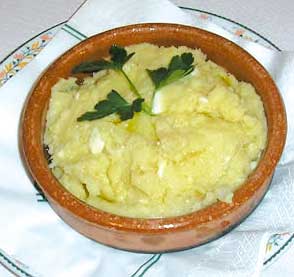
Ajo arriero
It is a simple dish elaborated with salt cod, cooked in a pan with varied vegetables; in which it is important to mention tomatoes and garlic. This dish is cooked in very different ways; the vegetables used and the accompaniment will depend on the cook, the season or the consumer preferences, there is not a fixed recipe. It is served very hot, and in a clay casserole traditionally.
Alajú
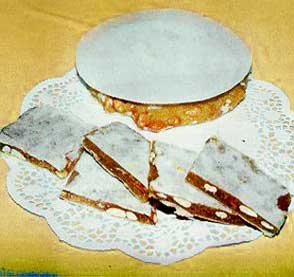
Alajú or alajuz is a dessert with a Castilla typical flat shape, typical from Cuenca's province, made traditionally with an almond paste, toasted breadcrumbs, fine spices and boiled honey, all covered with two wafers in both sides of the flat; sometimes walnuts are used, as well as pine kernel instead of almonds. Its name cames from the language of its inventors, the arabians, al-hasú, that means "filling".
Resolí
Resolí is a liqueur, original from Arabia, as it seems. Its alcohol content is about 16-18 degrees and its ingredients, although they vary depending on the brand that produces it (or the homemade recipe) are usually coffee, dry anisette or eau-de-vie, stick cinnamon, orange and lemon peel, sugar, clove and water.
It is a drink with a very characteristic taste, and it is usually drunk neat or with ice after meals, and often accompanied with some sweets, like the also typical from Cuenca alajú. Its is most consumed in Easter. Drunk in moderation, it has digestive properties.
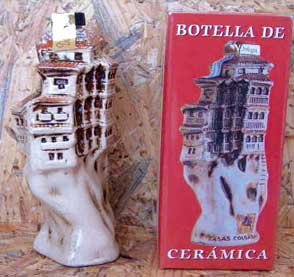
The resolí that we can find in shops is usually bottled, in containers that are extremely connected with the city of Cuenca: the Hanging Houses and adjacent buildings, a "nazareno", etc.
Some restaurants in Cuenca usually serve it, as a sign of courtesy and after meals, in a small glass wine bottle (with a long spout for drinking from), called "porrón".
As a curiosity, it can be mentioned that, although the correct spelling of the word is resolí (with the stress in the last syllable), most conquenses pronunce it "resoli", with the stress in the middle syllable.
 Index
Index