With Sir Walter Scott (1771-1832) the Scottish novel had a new beginning which extinguished all that went before it. In 1814 his novel Waverley, based on the Jacobite Rising was an instant success and over the next dozen or so years he wrote 23 historical novels. At the age of 18 months his right leg was rendered permanently lame by polio, and as an infant he was sent to his grandfather's farm in the Borders. He studied law at Edinburgh University from 1783, with interruptions because of his illness. He was indentured in his father's legal practice on 31 March 1786, but did not qualify as an advocate until 11 July 1792. Scott was to continue in his legal career until retiring in 1830. Scott published all his novels anonymously. Initially this may have been a precaution against the possible failure of "Waverley"; but even after its enormous success, Scott seems to have enjoyed prolonging the mystery (he was nicknamed "The Great Unknown" and "The Wizard Of The North"). His identity as the author of "Waverley" and its successors soon became an open secret, fairly widely known, but it was not until February 1827 that he officially "revealed" himself, at a public dinner in Edinburgh. Scott's novels generally depicted a deep understanding of the people and period they attempted to portray.In his Scottish novels he treats the history with great care and affection. His monument in Princes Street Gardens is testimony to his contribution to Scottish literature.Sir Walter Scott Monument
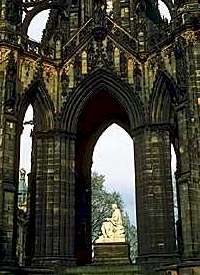
Located on Princes Street Edinburgh