Cronology:
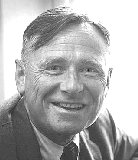
-1928-1929: He studied medicine at King's
College London
-1930-1933: he gave it up to teach
English in
-1928: Appeared All
the Conspirators
-1934:
The Memorial , exploring English middle-class malaise in the
1920s.
-1935: His experience as a tutor in
-1946: as The
Berlin Stories and were later adapted as a play
-1951: I
Am a Camera (the adapted as a play)
-1966:
Cabaret (adapted as a musical)
-1970: While
in Germany Christopher Isherwood had a boyfriend,
Heinz, who was wanted by the police for draft evasion. He tried to get
him out
of the country by paying Gerald Hamilton £1000 to smooth the way towards
obtaining Mexican naturalisation for Heinz. Nothing came of it and
Christopher Isherwood came to regard Gerald Hamilton as a rogue
laced
with poison. He is represented by Authur
Norris in Mr Norris Changes
Trains. Gerald Hamilton was also friends with Ferdinand, ex-King of
Erika
Mann, the daughter of Thomas Mann, asked
Christopher Isherwood to marry her so that she could obtain a
British
passport. He did not feel that he could do it, so he contacted W. H. Auden who did.
-1935-1946: In collaboration with the poet W. H. Auden, Isherwood wrote three experimental plays: The Dog Beneath the
Skin (1935), The Ascent of
F6 (1936), and On the
Frontier (1938). He travelled to
-1945-1967: Several of his subsequent novels—such as Prater Violet (1945),
Down There on a
Visit (1962), and Meeting by the
River (1967)—are concerned with the experience of sensitive individuals in
incongruous setitbusngs and circumstances.
The Essentials of the
Vedanta (1969) expresses his deep interest in Hindu philosophy (see
Hinduism).
In 1943 he became a devoted disciple of the Vedantist
Swami Prabhavananda, producing several works on
Indian Vedãnta in the following decades.
The World in the
Evening (1954) was a study of a young writer who attempts to understand the
failure of his two marriages and his homosexual needs. A Single Man
(1964) presented a single day in the life of lonely, middle-aged homosexual
man, whose partner dies. His biographical works include Lions
and Shadows (1938), an account of his early life and his experiences at the
-1972-1976: mand Kathleen
and Frank a joint biography of his parents. With Christopher
and His Kind (1976), a witty and utterly frank account of his life from 1929 to
1939, Isherwood revealed his homosexuality and its
overriding importance in his work. With his explicitly autobiogaphical
works Isherwood become in the 1970s a leading
spokesman for gay rights.
Copyright © http://www.booksfactory.com/writers/isherwood.htm
Academic year 2008/2009
© a.r.e.a./Dr.Vicente Forés López
© Cristina Díaz Díaz
crisdia5@alumni.uv.es
Universitat de València Press