


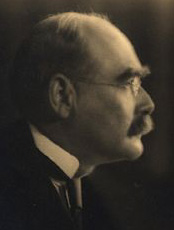
AN APROACH TO RUDYARD KIPLING
-AN APPROACH TO THE ENGLISH LITERATURE OF ADVENTURE
-RUDYARD KIPLING AND MODERNISM
-RUDYARD KIPLING AS AN IMPERIALIST
para una mejor visualizacion utilize Netscape Navigator
Academic year 2000/2001 (c) a.r.e.a./Dr.Vicente Fores Lopez (c) JUDITH DIEZ FERNANDEZ. Universitat de Valencia Press usuario@alumni.uv.es

RUDYARD KIPLING: LIVE AND WORK
Cronologicly, the period in which we can include Rudyard Kipling`s life and also his literature corresponds to the late of the Nineteenth Century and beginning of the Twentieth, or what is the same, we are dealing with the literature of the change of century, according to Kipling`s birth and death: 1865-1936. By this time, England, the country what the author belonged to, is living a crucial moment in it`s history. London was the big Capital city with more of six millions of habitants, the economical center of the world. The Empire had arrived to ist zenith. In 1887 is the first jubilee of Victoria Queen. And all this takes an important factor in the change of the English life.In the last therty years of the century the agriculture descends considerably and the industry grows up rapidly.The farmer is not autosuficient anymore so he starts following the general wheel of money. The wheat from North America and the Southamerican meet, since â'The frigorifique` was invented, threaten the rural base. And from the social and cultural point of view the picture of the countryside gentleman in a country mansion gets out of date, the country is seen now like weekend or holydays, while the intelect gets separate to the commercial and wage-earning world. The relationship between the writer and his society becomes now more problematic. We also should talk about the 'intermediate` character of the literature at this time, if we point out that on the one hand, the bases which enabled the Romanticism and the Victorian Novel to appear and develop are now obsolete, and on the other hand , 'Les Jeunes`(called in french for a better understanding), the ones who turned over the roots of literature: Pound, Eliot and the big expatriate Joyce, had not arrived yet.
An approach to the english literature of adventure: Exotic, teenage or teenage-imperialist
As we have already seen, London was at this time the center of the world power. Tree fundamental aspects characterize the Victorianism: Industrialization, urbanization and democratization.But although it is said that London was the economical world`s Capital, at the same time, it is also said that in culture and literature it was the 'anticapital` compering it to Paris, the one that by that time was was the mecca of culture and art. To the point that we can say that the English writers were more or less 'fashionable` according to what they knew or followed from Paris, and it was not an easy task if we consider the Symbolism and the posbaudelairiane poetry that France was producing. The three big points of production of English literature were London (like the central scenary of pole of atraction at least until 1920, Northamerica (New York begins to be the biggest area, more than Boston and ist New England, and with a secondary role for Chicago) and also Ireland. In narrative, the pact with the Victorian Novel, in which the writer accepted without discussion the units imposed by the taste and hipocresy of the dominant class, has finished and the English novel of this period gets divided by three ways: The growing psycological and moral analysis, the radicalism in social Critics, and the third, more atractive, different and imaginative, the one that shows the exit to exotic and fantastic worlds. Following the first line we can point out Meredith and Hardy. Both authors turned what was called 'brain-stuff ` with a big amount of theoretical comments and descriptive rhetoric. The problems are normally of love, in the line of personal analysis, free of objective annoying references to the economical and social structures.The second line we have mentioned is the one which lies on the Social Critics. But the one most interesting of this period and the one which is related to the author am dealing with, is the third one. In a moment in which is difficult to obtain something literally valid inside the traditional realism, where the literary high society does not contribute to anything that is not responsible for their interests, a new way is opened for the narrators: the adventure, the getaway to remote horitzons, with sailings and jungles, according to the imperial believes of the moment. There is also a change in the editorial market in two senses: It is recognised the teenage and childish spirit in adult readers, and more technically it is discovered the advantadge of a smaller format with a reduced amount of pages than the typical for the Victorian novel, which offers a cheaper and quicker way of writing. The book that gives name to this new gender is the 'Treasure Island`, 1883, by Robert Louis Stevenson, an exquisit writer and essayist of prose. Is in this atmosphere where we find Rudyard Kipling(1865-1936) with the teenage spirit of Stevenson, but also with a big compromise with the colonization, supposed to be civilizing and positive for those rudimentary cultures. The writer assumes the imperial cause like a moral task,with a sacred ritual of discipline and virile virtues. The formalization of the fight in order to give it some sense of impartiality, where only wins the best one, like the famous britanic sense of 'sport`with 'handicap` and everything. Kipling does not only get on well with the teenager, like Stevenson. He is a teenager and also a child. His central work is 'The Jungle`s Book`,1894, where the animals speak and sing while the human being -Mowgli- appears like other animal from the jungle, the one more helpless and defenceless for being less adaptable than the other species.
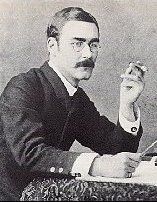
The publishing of Kipling`s work, 1890-1932, coincides with the development and stablishment of the modernism as the dominant literary style of the twentieth century. Although this affirmation would be clear and easy enough to start an analysis of Joseph Rudyard Kipling`s huge body of writng, it seems to have little obvious relationship to Modernism, or at least, this is what we can deduce from the critical attention that our author has been receiving until now. It is clear that Kipling`s work, particularly his poetry, has received far less scholarly and influence than other modernist writers such as Wiliam Butler Yeats, T.S.Eliot, Ezra Pound or Wallace Stevens. This inability to inspire the most intense kinds of critical interest is widely explained by his literary style and his subject matter. And this becomes well-explained if we consider Rudyard Kipling as politically imperialist and socially reactionary. Also his characteristically rhyming, rhithmically regular, remains far away from the twentieth century taste. Neverthless, Kipling`s poetry is also justified and clearly recognized by most of ist admirers, and in his verse one could also find many of the great qualities of the best modernist poetry: plainness, concision, passionate utterance instead of worn-out poetic diction, conviction, sharp images, a revitalized sense of history, great artistic craft, originality.
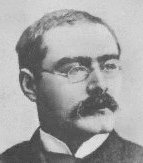
Like in every author, particularly in this one, Kipling`s work cannot be extracted out of his life and viceversa. All his work is the consequence of his travelling and his critical impression of the different places, politically, socially and culturally analysed, showing always the strong character and fixed ideas that characterized his personality.
T.S.Eliot, who has writen the most enlightening evaluative essay on Kiplinh`s work, saw three periods in Kipling carreer: his living in India, his worldwide travel and residence in America and his final years in sussex, England. Rudyard kipling was born in Bombay, India, on 30 December 1865. By this time India was a secure colonial possession of Victorian England. His parents John Lockwood Kipling and Alice Macdonald Kipling were working and living in the country that influenced the future writer for the rest of his life and work. John Lockwood Kipling was in India to preserve, at least in part, the different art styls and architecture, which representing a tradition of hundreds of years, were threaten by an influx of new capital with a commercial profit. Her mother, Alice, had a family related to the world of art. Her older sister had married the victorian painter Sir Edward Burner Jones and attending to the Kipling`s wedding in March 1865 were many Pre-Raphaelit painters and writers. According to the english tradition Kipling`s parents returned him and his sister to England in 1871 so that the children could begin school there. His parents left them at Lorne Lodge in the South Sea suburbs, with a man and a woman who treated the children cruelly. It is no wonder that Kipling vividly remembered this place as the 'House of Desolation`. Kipling`s parents returned to England in 1877 and he also returned to a more enlightened atmosphere. In 1878 Kipling went on to a school called Westward-Ho. This school was recently stablished by a person connected to the Victorian artists, writers and intellectuals, that the Kipling family had met through Burne-Jones. Kipling wrote some verse at Westward-Ho, verse that remained until his mother had it printed in Lahore, India in 1881, as "School boy Lyrics`. The next stage of Kipling`s life is, perhaps, most crucial. His parents could not afford to send him to Oxford, and instead he returned to India in 1882 to be 'educated`. Kipling started working as a newspaper writer for the Civil and Military Gazette in Bombay. The young writer worked in this Indian newspaper for the next seven years while he wrote short stories and poems. At least, the Gazette began to publish Kipling`s verse under the heading "Bungalow Ballads`. Kipling was also working on the short stories that were collected in "Plain Tales From The Hills` published in 1888. In 1890 a collection of his verse and specially "Plain Tales from The Hills` became popular in India. In 1888 ocurred, according to C. E. Carrington, the first Kipling 'boom`. In March 1889, Kipling started what was to be a seven-month journey to London. He travelled east, passing through Southeast Asia, China, Japan, and then arriving in San Francisco. Although, unlike most English writers touring the United States, Kipling first travelled through America from West to East. Absent for seven years, Kipling finally arrived in London in October 1889. In October one of Kipling`s most famous poems "The Ballad of East And West` was published in Macmillan`s Magazine. Kipling had yet another world to travel through: the literary life of London. And he said about London that 'there is no provincialism like the provincialism of London`. Eighteen ninety saw the publication or republication in England and America of more than eighty short stories, many ballads and a novel. The market was flooded with his work in verse and prose. In 1892, a collection of verse was published under the name of 'Barrack-Room Ballads` ('Danny Deever`, 'Cells`, 'Gunga Din`, 'Mandalay`). And after the great success of Kipling`s new ballads, magazines began pirating his work and many unanthorized editions of Kipling's work were published. All this caused many problems and worries that made him exhausted and already also surfeited with living in England. Therefore he travelled a great deal for the next year, visiting Italy and America and taking more than four-momth-long voyage to South Africa, Australia, New Zealand, and for the last time, to India . On 18 January of 1892 Kipling married, in London, the American Caroline Balestier, sister of Kipling's good friend Wolcott Balestier. The wedding was small and private. And with his wife Kipling was happy to leave England again, and they sailed to America to settle on the Balestier family property in Brattleboro, Vermont. But first they embarked on propouse round the world honey- moon what was abruptly halted in Japan due to failure of a bank in which Kipling had deposited his money. First they lived in a small cottage in Vermont, and then in a house which they built and named 'Naulakha`. Kipling was in love and doing some of his best work. He had as he wrote to William Ernest Henley 'The real earth within reach of my hand, whenever I tire of messing with ink`. Also his economy was going well, Kipling was soon earning good money for his writing twenty five thousand dollars in 1894, including five hundred dollars for one poem, and as usual, he was becoming personally acquainted with the powerful in politics and society. In Brattleboro Kipling found less positive, endemic culture that he could in far-flung corners of the British Empire: 'It would be hard to exaggerate the loneliness and sterility of life on the farms`. After a quarrel with his brother-in-law, and them a storm of bad publicity, Kipling went back to England in August 1896, with his wife and now two daughters, Josephine, about four years old , and Elsy, only seven months. The family was generally unhappy and felt uprooted in a cold damp house in Maidencombe, near Torquay, until, toward the end of spring in 1897, they moved again to a village near Bhrigton in Sussex, Rottingdeam. Here the family settled for five years, and a third child, John, was born in August of 1897. Kipling was becoming still more famous, his fame increased and his poems began regularly to appear in the 'Times`of London. At the same time Kipling was also travelling out of England: to South Africa in January 1898, to America in February in February 1899( a disastrous trip during which during his eldest daughter died and he too nearly sucumbed.). And from 1900 to 1908 to South Africa again for most of every winter. Kipling`s frequent voyaging to and from England led him to write poems about his native country and the parts of ist empire he visited, but by 1904 he was writing more and more about his now permanent house in Sussex, where he had settled in 1902. Kipling is better known as a poet and a short story writer than a novelist. He wrote only three novels and collaborated with Balestier on 'The Naulahka: A Story of West And East`. Kipling`s first novel (1890) is partly autobiographical, and 'Captains Courageous` (1897), published short after his return to England in 1896, is based on his observation of life in New England. Kipling`s best novel "Kim`, was published in 1901.The glory of Kim lies not in ist plot nor in ist characters but in ist evocation of the complex indian scene. In 1907 Kipling obtained the nobel prize for literature. On the subject of World War I Kipling`s poems express a far wider and sympathetic range of feelings. To incite enthusiasm for the initial war effort Kipling wrote in 1914 "For All We Have And Are`. As the title suggests, the poem uses very hard and formal diction. There are also the usual kipling verses atacking what he considered political trachery. For instance "The Question`, written in 1916. In the autum of 1915 Kipling`s eighteen year-old son, John, was wounded and reported missing in action.More than two years elapsed before there was confirmation that, as Kipling already believed, his son had been killed. Reflecting on the event, Kipling wrote, with a kind of cathartic restraint, "My Boy Jack`. Kipling`s best and most justifiably well-known poems on World War I are his "Epitaphs Of The War`. The poet suffered an intestinal hemorrhage resulting from an ulcer condition, in 1936, and was burried in Poet`s Corner in Westminster Abbey. The poet had felt and written with unmistakable and austere clarity about what still seems to remain as the greatest fear of the twentieth century: This is the midnight_let no star Delude us_dawn is very far. This is the tempest long foretold_ Slow to make head but sure to hold.
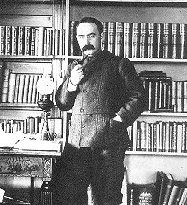
Plainness, concission, and a revitalized sense of history are some of the qualities of Kipling`s poetry. And there is not a significant change or development in Kipling`s poetic style. Kipling did not show much need to change his personal values trhoughout his life of writing. For Kipling the poet had the same plane yet essential needs and means as the people whom he wrote about. Charles Eliot Norton early recognised that Kipling in his own way fit Wordsworth`s ideal that the poet is "a man speaking to man` who "binds together by passions and knowledge the vast empire of human society`. At the same time Kipling seems to exemplify, in his own distinctive manner, Ben Jonson`s dictum that poetry should exhibit the manners and language which people actually use. Kipling contended that the magic of literature lies in the words, and not in any man. Moreover, the identity of the poet exists solely through the society he represents. Another feature of Kipling`s poetry is its sound. He wrote many of his poems to be read aloud. For Kipling this criterion required consistent use of regular rithym, rhymes of all kinds, formal stanzas, the ballad, and forms of popular song.The writer would avoid using free verse, which he likened to "fishing with barbless hooks`. In his autobyography Kipling remenbers how, when writing his poems in India: "I made my own experiments in the weights, colours, perfumes and attributes of words in relation to other words, either as read aloud so that they may hold the ear or, scattered over the page, draw the eye. There is no line of my verse or prose which has not been mouthed till the tong has made all smooth, and memory, after many recitals, has mechanically skipped the grosser superfluities`. In "Department Ditties`, his first poems, Kipling states the classical notion that human native is unchanging regardless of geographical place or historical period, in "A General Summary` he also emphasise on "official sinning`: opposed to the more private abuses people manage to keep private. But what is really relevant in Kipling literature is the value and ethic of work. A balance, perhaps, for Kipling`s rather exotic childhood in India and his contact with some of the major influences on Victorian aesthetic sensibility is that his grandfathers on both sides were Methodists ministers. According to Angus Wilson, Kipling`s later emphasis on the values of work, discipline, and earnestness flowed directly from this source of dissenting religion. And also G.K.Chesterton was the first to point out Kipling`s strong attraction to the theme of work and the discipline which it requires. In 'The Ballad of East and West`, Kipling employs couplets of fourteen syllables_ the 'fourteener`which he considered 'a craft that will always sail itself `. Kipling`s famous ballad clearly states that supersending the apparent, even dramatic differences between Eastern and Western people is a universal yet divine element in human nature which knows no natural or racial boundaries. In 'Barrack-Room Ballads` Kipling topic was the British soldier: 'arms and the man`, expressed to the thumping rhythim of popular song and employing the low diction of cockney dialect. Their technique, fresh and impressive then, might also seem extraordinary in light of later poetry. Not only were they conversational, factual and not impressionistic, but they made statements to be understood as definite and not ambigious.The poems themselves are about the hard circunstances of enlisted life. The last quatrain of 'Tommy` typifies what Kipling recognized as the pathological love-hate relationship a society can have with ist soldiers. The antithesis between war and peace, undoing relations between political states, has a perhaps even more debilitating effect upon the affinity between the defended and their defender. Seeing justice at ist most unmerciful and nationalism at it most selfish, Kipling`s soldier also sees the worst in himself: his rapine in 'Loot` his uncontrollable drunkness in 'Cells`, his racism in 'Gunga Din`. At the same time in 'Mandalay` he sees an alien world he is made to patrol yet which seems more friendly, exotic, and beautiful than his homeland. 'The Explorer`, a poem of 1898, seems to typify a need to discover new surroundings. In this case a human spirit is struggling alone to find new places, new conceptions, and fresh, original perspectives about which a tired culture can no longer even dream. On the other hand, no poet since the seventeeth century has written on political issues as considerably, coherently, and conprehensibly as Kipling. His efforts were not selfserving; he would take no payment for the political poems which appeared in the Times and, in 1899 refused the Conservative prime ministers offer of knighthood. Kipling was a menber of no political party, and his occasional lack of reverence could at times embarrass anyone who claimed his allegiance. 'Recessional`, one of Kipling`s best known poems, was first published in July 1897, to commemorate Queen Victoria`s second jubilee. For her first jubilee in 1887, Kipling had written the Barrack-Room Ballad. 'The Widow at Windsor` which, as Carrington points out, could not be perceived as overly complementary. As it has been already mentioned before, Rudyard Kipling is better known as a poet and short-story writer than as a novelist. He wrote only three novels and collaborated with Balestier on the 'Naulahka: A Story of West and East`. Kipling`s first novel, "The Light That Failed` (1890) is partly autobiographical, specially in ist depiction of the 'House of desolation`. The" Naulahka` is not even discussed in Kipling`s autobiography. It reads more like one of his travel books than a novel. Ist depitcion of the Indian scene is not as well done as it is in Kim. The novel seems rather hastily and opportunistically concocted and suffers from lack of unity and design, perhaps as a result of the unwieldly nature of joint authorship. 'Captain Corageous`(1897), published shortly after his return to england in 1897, is based on his observation of life in New England fishing sports. 'Kim` is considered as Kipling`s best novel. The great diversity of the land, ist cast; ist sects; ist geographical, linguistic, and religious divisions; ist numberless superstitions; ist kaleidoscopics sights sound colors, and smells are brilliantly and lovingly evoked.
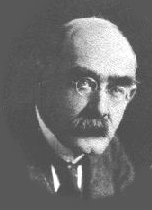
Rudyard Kipling as an imperialist
Kipling was undoubtely and demonstratively a patriot; he knew, and was socially accepted by the most powerful political leaders of his country. But as Orwell said of him 'Few people who have criticized England from the inside had bittered things to say about her..` This bitter criticism is implicit in "Barrack-Room Ballads`, and it derives substantially from what he considered the pride, ignorance, and parochialism of native British people, who enjoying a worldwide empire, still regarded ist inhabitants with contempt. To Kipling, whose mind had been formed in India and nurtured by his travels throughout the empire, such an attitude was irresponsible: it would lead inevitably to the loss of whatever empire had been gained and the worsening of whatever conditions had existed in places such as India before they were taken overby the British. As Eliot recognised 'For Kipling the empire was not merely an idea, a good idea or a bad one; it was something the reality of which he felt`. While Kipling was the British Empire`s most lyrical supported, he at the same time tried to be ist conscience, by urging the British to stop being xenophobic and to start regarding the other parts of the empire as Britains equals. The opening lines of Kipling`s most positively imperialistic hymn 'The English Flag`, precisely phrase his challenge: 'Winds of the world, give answer! They are whimpering to and fro/ And what should they know of England who only England know?. One should add, perhaps, that no empire has ever accepted the responsability Kipling claimed for the British`. In 'Something About Myself ` Kipling wrote about America: 'Every nation, like every individual, walks in a vain show_ else it could not live without itself_ but I never got over the wonder of a people who having extirpated the aboriginals of their continent more completely than any other modern race has ever done, honestlybelieved that they godly little New England comunity, setting examples to brutal mankind`.
Academic year 2000/2001 (c) a.r.e.a./Dr.Vicente Fores Lopez (c) JUDITH DIEZ FERNANDEZ. Universitat de Valencia Press usuario@alumni.uv.es
