Ethnocentrism
is a major aspect of all cultures, and a particularly powerful tendency in
Western culture. The dominant discourse of Western culture presupposes that the
world's cultures are a coherent structure centered upon the unquestioned
superiority of Western culture (thought, art, religion, etc.) over what we call
"Non-Western" culture, as if such a culture could only exist as a
negation of Western culture, not as a positive entity in itself, and as if it
existed only on the margins of Western culture, as if it were
"marginal."
A number of critics in recent years have attempted to decenter the
dominant discourse of Western culture in order to open the West up to the
discourses of non-Western cultures (their literature, their art, etc.) by
showing that these other discourses are not marginal, but are equally as
valuable as Western culture. Such critics are generally called multiculturalists.
They argue that the world is constituted by a set of equally valid cultures with
no central culture.
Some critics, called "essentialists," argue that each culture
is such a unique entity that it cannot be described by the discourses of other
cultures. Non-Western cultures cannot fit into the rational, centered structures
of Western culture. Unfortunately, this argument closes off all dialogue between
Western culture and other cultures.
Other critics assume that Western discourse need only learn to open up to
the attributes of other cultures that do
not resemble its attributes.
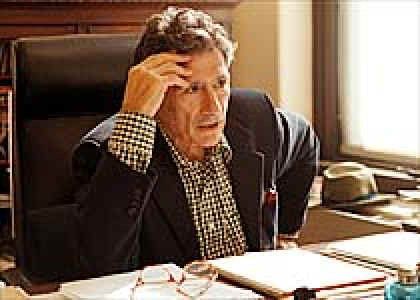
Edward
Said is a major critic who has attempted to open Western culture up to the
discourses of Arab culture.
In this web site we will try to give some answers to primordial questions such as: Who is Edward Said?What are his main ideas? What does he mean by `orientalism'? What were the influences on his thinking? What is the influence of his ideas?What do critics think about him?