 home
home
http://www.deadline.demon.co.uk/wilkie/biogs.htm
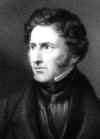
William Wilkie
Collins, or Wilkie as he was known to his friends and readers, was born
in London's Marylebone where he lived more or less continuously for 65
years. Today he is best known for The Moonstone (1868), often regarded
as
the first
true detective novel, and The Woman in White (1860), the archetypal sensation
novel. During his lifetime, however, he wrote over thirty major books,
well over a hundred articles, short stories and essays, and a dozen or
more plays.
He lived
an unconventional, Bohemian lifestyle, loved good food and wine to excess,
wore flamboyant clothes, travelled abroad frequently, formed long-term
relationships with two women but married neither, and took vast quantities
of opium over many years to relieve the symptoms of ill health. Collins's
circle of friends included many pre-eminent figures of the day. He knew
the major writers, particularly Charles Dickens with whom he regularly
collaborated, as well as a host of minor novelists. His friends and acquaintances
included some of the foremost artists, playwrights, theatrical personalities,
musicians, publishers, physicians and society figures of the time. Collins's
unorthodox lifestyle reveals a cynical regard for the Victorian establishment.
This view is reflected in his books together with a sense of humour and
a profound understanding for many of the then prevailing social injustices.
The Early Years:
Wilkie Collins
was the elder son of William Collins the celebrated landscape artist and
portrait painter and named after his godfather, Sir David Wilkie. His schooldays
began in 1835 at the Maida Hill Academy, followed by a two year interruption
when he accompanied his parents and younger brother, Charles, to France
and Italy from September 1836 to August 1838. He later recalled that he
had learned more in Italy 'which has been of use to me, among the scenery,
the pictures, and the people, than I ever learned at school.' He also claimed
that he had fallen in love for the first time in Rome at the age of 12
or 13. Returning to England, his schooling continued at Cole's boarding
school at 39 Highbury Place. It was here that he began his career as a
storyteller to appease the dormitory bully, later recalling that 'it was
this brute who first awakened in me, his poor little victim, a power of
which but for him I might never have been aware.' His appearance was distinctive
since he was born with a prominent bulge on the right side of his forehead.
He was only five feet six inches tall but with a disproportionately large
head and shoulders. His hands and feet were particularly small and pictures
from the age of 21 show him wearing spectacles.
Wilkie left
school in 1841 and was apprenticed to the tea merchants Antrobus &
Co. in the Strand. It was here, in what he called 'the prison on the Strand'
that he began his writing with his first signed publication, 'The Last
Stage Coachman' appearing in Douglas Jerrold's Illuminated Magazine in
August 1843. From May 1846 Collins became a law student at Lincoln's Inn
and was called to the bar in 1851. He never practised his profession although
several lawyers feature prominently in his subsequent novels. His father
died in 1847 and his first published book, The Memoirs of the Life of William
Collins, Esq., R.A., appeared the following year and received good reviews.
It was followed by an historical novel, Antonina (1850) and three contemporary
novels, Basil (1852), Hide and Seek (1854) and The Dead Secret (1857).
The Dickens Connection:
During the
1850s, however, Wilkie's main income was derived from journalism with numerous
contributions to Bentley's Miscellany, The Leader and more particularly
Dickens's Household Words. He had first met Dickens in 1851 through the
introduction of Augustus Egg. Collins, always keen on amateur theatricals,
needed little persuasion to join the great man's company for his production
of Bulwer-Lyttons's Not so Bad as We Seem, written to raise money for the
Guild of Literature and Art. A firm friendship developed between the two
writers which lasted until Dickens's death in 1870. They frequently travelled
together on the Continent to France and Italy and Wilkie became a frequent
visitor to Dickens's homes at Tavistock House and Gad's Hill where he was
encouraged to fulfil his theatrical ambitions. Collins wrote The Lighthouse
in 1855 and The Frozen Deep in 1856. Both were originally produced by Dickens
and his company but were subsequently performed on the professional stage.
Collins first contribution to Household Words in 1852, 'A Terribly Strange
Bed' is still published in modern anthologies of 'terror and the supernatural'.
He joined the permanent staff of the magazine in November 1856 at a weekly
salary of 5 guineas. Altogether he wrote more than 50 stories and articles
many of which were republished in After Dark (1856), The Queen of Hearts
(1859) and My Miscellanies (1863). Dickens's correspondence frequently
mentions Collins's industry and dependability and they collaborated on
several of the Christmas numbers.
Despite his
growing success, Collins's health began to decline during the 1850s and
1860s, suffering from what he always described as 'rheumatic gout' or 'neuralgia'.
These affected his eyes with particular severity and he often needed the
services of a secretary - provided either by Frank Beard, his doctor and
lifelong friend, or Carrie Graves. He visited numerous physicians and tried
various remedies including Turkish and electric baths, Health spas, hypnotism
and quinine. Ultimately Beard prescribed opium in the form of laudanum
as a pain-killer and sedative, but always for purely medical reasons. Over
the years Collins developed an enormous tolerance and eventually took daily
'more laudanum than would have sufficed to kill a ship's crew or company
of soldiers.
The Woman in White and Success:
It was during
the 1860s that Collins achieved enduring fame with his four major novels,
The Woman in White (1860), No Name (1862), Armadale (1866) and The Moonstone
(1868). The first of these was published in Dickens new journal, All the
Year Round from November 1859 to August 1860. It was received with great
popular acclaim and ran to seven editions in 1860, alone. All kinds of
commodities such as cloaks, bonnets, perfumes were called after it; there
were Woman in White Waltzes and Quadrilles; it was parodied in Punch; Gladstone
found the story so absorbing that he missed a visit to the theatre; and
Thackeray was engrossed from morning to sunset.
The sudden
meeting in the novel of the hero, Walter Hartright, with the mysterious
woman in white is said to have been inspired by a real life meeting between
Collins, strolling home one evening in 1858, accompanied by his brother
Charles and the painter Millais. They were accosted, so the story runs,
by 'a woman dressed in flowing white robes escaping from a villa in Regent's
Park where she had been kept prisoner under mesmeric influence. ' The real
life woman in white was Caroline Graves who probably met Wilkie in the
spring of 1856. She was a widow, originally came from Gloucestershire,
and had a young daughter, Harriet Elizabeth (usually known as Carrie).
Caroline and Wilkie never married but lived together from about 1858 for
the best part of 30 years.
The Other
Woman :
About 1864,
however, Wilkie met the other woman in his life, Martha Rudd, possibly
in Great Yarmouth near her home in Winterton, or perhaps in London where
she may have come to work as a maid in his mother's house. Wilkie had turned
40 while Martha was just 19. By 1868 she was installed by Collins at 33
Bolsover Street within walking distance of his other, more impressive household
at 90 Gloucester Place (now renumbered 65). To give their liaison a degree
of respectability, for they also never married, Wilkie and Martha assumed
the identities of Mr and Mrs William Dawson, the name given to their three
children, Marian, Harriet and Charley.
Whether Martha's
arrival caused the temporary rift between Wilkie and Caroline, or whether
she simply gave him an ultimatum over marriage is uncertain, but in October
1868 Caroline suddenly married one Joseph Clow. Carrie and Frank Beard
were the witnesses while Collins was himself present at the ceremony in
Marylebone Parish Church. By April 1871, however, Caroline had returned
to Gloucester Place and continued to live with Wilkie until his death in
1889. She died in 1895 and is buried in the same grave in Kensal Green
Cemetery
The Moonstone and Other Major Works:
T. S. Eliot
described The Moonstone as the first and greatest of English detective
novels'. It is certainly a landmark in the history of crime fiction and
has a strong claim to having established detective fiction as a genre.
It influenced Collins's successors from Trollope and Conan Doyle onwards
and has set the standard by which other detective novels are judged. During
its serialisation in All the Year Round there were crowds of anxious readers
outside the publishers' offices in Wellington Street waiting for the next
instalment. Like The Woman in White, it has never been out of print.
Armadale
is Collins's longest novel with a complex story spanning two generations
of the Armadale family. It incorporates several of his favourite themes
including the supernatural, identity, murder and detection and features
a beautiful red-headed female villain. No Name is the story of the heroine's
attempts to regain her family fortune and represents a plea by Collins
against the then prevailing laws on inheritance and illegitimacy. It may
be regarded as an early attempt at the didactic novel which Collins pursued
more vigorously from the 1870s when he came under the influence of Charles
Reade. Swinburne regarded Man and Wife (1870), which attacked both marriage
laws and the cult of athleticism, as 'the first and best' of the type,
'so brilliant in exposition of character, so dextrous in construction of
incident. ' The Law and the Lady (1875), featuring an early example of
a female detective, protested against the Scottish not proven verdict;
Jezebel's Daughter (1880), otherwise full of poisoning and melodrama, made
a plea for the humane treatment of lunatics; whilst Heart and Science (1883)
took up the cause against vivisection.
The Final Years :
During the
1880s, Wilkie's always delicate health continued to decline. Breathing
difficulties due to heart problems became more common and he resorted to
capsules of amyl nitrate and hypo-phosphate. In January 1889 he was involved
in an accident and thrown from a cab by the force of the collision. There
followed a severe of attack of bronchitis. He suffered a stroke on 30 June
and with further complications died on 23 September.
Many of Collins's later novels do not possess the force and freshness of his earlier works. Nevertheless, he remained immensely popular with the reading public and the Chatto & Windus collected edition continued to be issued for many years after his death. Now, a century later, there has been a great revival in interest both in his enigmatic lifestyle and his unique gift as a master story-teller and constructor of labyrinthine plots. There have been two recent biographies as well as radio, television, cinema and theatrical productions. Nearly all of his works have now reappeared in the bookshops from which they had been absent for many years. Once lost in unjust obscurity and partly overshadowed by his great friend Dickens, Wilkie has returned in his own right.
home
http://www.deadline.demon.co.uk/wilkie/biogs.htm