First Paper: Aldous Huxley's Brave New World and the meaning of Modern Utopia
Second Paper: Essay on Brave New World
Third Paper: Criticism on Brave New World
Student's
name: Maria Teresa
Galarza Ballester
Title of the
paper: Aldous Huxley's Brave New
World and the meaning of the Modern Utopia
Author
or topic: Aldous Huxley
Abstract
or summary of the research in not more than 100 to max. 150
words:
The idea of a perfect society
ruled by superior men has always been in the mankind's mind. That
perfect society would appear as an Utopia. The word Utopia was first
mentioned in 1516 by Tomas More and it had the meaning of a "Happy
Place". It may be asserted, however, that nowadays the word has
pejorative connotations. Aldous Huxley wrote Brave New World
in 1932, when totalitarian powers were gaining pace towards social
and cultural life. Those powers were a kind of Utopia based on
planning and organization of everything, including people. In my
opinion all this shows that Utopia is the negation of individual
sovereignty and freedom, which leads us to the meaning of what I call
Modern Utopia. The aim of my work is to highlight the criticism that
Huxley made in his Brave New World; thanks to him and other
authors such as Orwell, very few people can actually think of Utopia
as a positive state and as a Happy Place.
Academic
year 1998/1999
12.marzo 1999
© a.r.e.a./Dr Vicente
Forés López
© Mª Teresa Galarza
Ballester
Universitat de València Press
ESSAY ON BRAVE NEW WORLD
1. Utopia in the Brave New World
1.
Utopia in the Brave New World
In Huxley's BNW the leaders who rule the world have created a kind of Utopia, but we know that Huxley believed that any attempt to create a perfect world is dangerous, as we read in the epigraph chosen by Huxley for the novel:
Les utopies apparaissent comme bien plus réalisables qu'on ne le croyait autrefois. Et nous nous trouvons actuellement devant une question bien autrement angoissante: Comment éviter leur réalisation définitive? ...Les utopies sont réalisables. La vie marche vers les utopies. Et peut-être un siecle nouveau commence-t-il, un siècle où les intellectuels et la classe cultivée rêveront aux moyens d'éviter les utopies et de retourner à une société non utopique, moins "parfaite" et plus libre.
In
BNW people seem to be happy, but it is not true because they have
sacrified their real happiness, which is inaccesible to the leaders
of the BNW since it is impossible to create via technology.
The
utopia has a stiff class structure: the leaders are some sort of
dictators, they rule their BNW which implies that they decide about
the future of the people.
Citizens must not fall in love, they
can not get marry and they can not have children, who are made up in
bottles and divided into five classes, it is a world of human clones,
so technology is the most important way to create the BNW.
There
are some easy ways of feeling good: on one side, there is "soma",
which is a drug used to escape from reality, and in the other side,
sex is a way to spend time, they can have sex with every one.
The
BNW seems to have something good: there is no war ( the worst problem
which affects us in our world) and there is no poverty because
everyone has their own job.
However, as we are reading the novel
we find out that BNW is not a happy place, it is a Modern Utopia ( or
what is the same, a totalitarian power). Moreover, one of the
characters commits suicide and we see how terrible this utopia can
be.
Clearly, Huxley wants to get the reader's rejection to his
BNW.
2. Science and Technology
Science is the most important way to create the BNW. We realize since the very beginning of the novel:
"And this, said the Director opening the door, is the Fertilizing Room."(1)
Afterwards, we are informed about how children are created,
"These, he waved his hand, are the incubators. And opening an insulated door he showed them racks upon racks of numbered test-tubes". (2)
"If any of the eggs remained unfertilized, it was again immersed, and, if necessary, yet again; how the fertilized ova went back to the incubators; where the Alphas and Betas remained until definitely bottled; while the Gammas, Deltas and Epsilons were brought out again, after only thirty-six ours, to undergo Bokanovsky's Process”. (3)
"The Predestinators send in their figures to the Fertilizers. Who give them the embryos they ask for. And the bottles come in here to be predestinated in detail. After which they are sent down to the Embryo Store" (7)
Technology
is the force which makes the BNW, but it implies that there is no
freedom since everybody is predestinated as an Alpha, Beta, Gamma,
Delta or Epsilon.
Huxley gives us warning against the bad use of
science.
3. Conformity and Conformism
People
in BNW are conditioned to conform 5 patterns according to their jobs,
and they can not change their patterns.
Also, they do not want to
change it, since they are made up to be happy.
4. Totalitarian Power
BNW
is ruled by a totalitarian power, the words "Community, Identity
and Stability" are the first that inform us about that
situation.
The five patterns in which people are divided are
necessary for the people who rule the BNW, if everybody were an Alpha
they could have problems because they belong to superior class, so
the leaders need a "first class" and a "second class"
which are better than the other three. It may sound impossible, but
no long ago Hitler wanted to be the leader of a superior class (the
Germans) which is not so different from the BNW.
5. Sources of Happiness
In
BNW there is no family, which I think it is considered to be the best
source of happiness.
The family is replaced by drugs and sex.
"Soma" is the drug, it makes people escape from reality and
it does not cause damages.
Sex is another possibility, people can
have sex with everybody since promiscuity is a good quality.
There
are also movies in which people can watch a couple having sex, but
also they can feel the same as the couple of the movies.
There
are not more sources of happiness.
6. The Characters
Henry Foster: He is a scientist in the London Hatchery, he is the one who explains us the workings of the Hatchery.
Bernard Marx: Bernard Marx is different from the others characters, he likes to be alone, which is not normal in BNW. At the beggining Bernard seems to be the best character, because he criticises the world that others accept. But when he comes back from the Savage Reservation, he becomes popular with women, and he likes it. In the end, he is exiles to iceland.
"The days passed. Success went fizzily to Bernard's head, and in the process completely reconciled him (as any good intoxicant should do) to a world which, up till then, he had found very unsatisfactory." (128)
Lenina Crowne: She is the typical girl of the BNW, but she sometimes spend too much time with only one man. Afterwards, she finds John, the savage, attractive, but she is only capable of sexual response.
"A gramme in time saves nine, said Lenina, producing a bright treasure of sleep-taught wisdom." (74)
Helmholtz Watson: He is physically attractive, but he does not want to accept the monotonous happines which provides soma and sex. When the savage introduces him to Shakespeare, he appreciates it. He knows that he is able to write good literature.
"But your things are good, Helmholtz. Oh, as far as they go. Hemholtz shrugged his shoulders. But they go such a little way. They aren't important enough, somehow. I feel I could dosomething much important." (58)
Mustapha Mond: he is one of the ten World Controllers, and he is one of the few characters who has a knowledge of the history and culture, he also has read Shakespeare and the Bible's works, which are forbidden books.
John,
the savage: He is brought to the BNW by Bernard from an Indian
reservation. John's mother become pregnant accidentally, and she got
lost while she was visiting a savage Reservation. She gave birth to
Fohn in the Savage reservation.
Fohn is in my opinion the main
character, because he is different from the citizens of BNW and he is
the only one who can compare the two different world. He commits
suicide when he was living in the BNW, which proves that it is better
to live in a Savage reservation than in the BNW.
7. Plot
The
novel starts with the director of the World Hatcheries taking the
students to a tour of the "central London Hatching and
Conditioning Centre", where babies are made up in bottles. Mr
Foster explains how the fetus is predestined and conditioned into the
five class levels.
In the first three chapters we know that Ford
is a kind of God, also, we have references to sexual activity, what
is considered normal in BNW it is what we consider not normal or
immoral.
Each group of people has its own job, afterwards,
Helmholtz is introduced to us, and we realise that both, Helmholtz
and Bernard are the different ones, they do not like their life. This
leads us to the conclusion that the conditiones process is not always
succesful.
Bernard asked Lenina if she wanted to go to a Savage
reservation with him. The director told Bernard that when he went
there with a friend called Linda, she disappeared.
Bernard and
Lenina went to the Savage reservation, an Indian Guide takes Bernard
and Lenina to see the savages, Lenina does not like them at all.
Afterwards they found John, who said that his mother (Linda) came
to the reservation with his father. When they met Linda, she explains
her horrible life in the reservation, the author stresses that Linda
had difficulties living on the reservation because she had been
conditioned to live in the BNW. We realize the differences between
the two cultures.
Bernard took Linda and John back to the BNW,
when Linda took too much soma, and she fell into coma.
Lenina and
John fell in love, but he could not accept the way Lenina loved him.
Linda died in
hospital, Helmholtz and Bernard arrived at the Hospital and Helmholtz
helped John to destroy the drug.
The three men are called to see
Mustapha Mond because he knew that the three men had peculiar minds,
and he explains that since their society was planned for happiness,
freedom should be abolished. He also explained how society had
developed without knowledge of literature, and in order to get happy
people, only certain people (like him) could read that kind of books.
Both Bernard and Helmholtz were exiled.
John was forced to remain
in the BNW, he wanted to live as the way he did in the reservation,
he sought refuge in an abandoned house but crowds went to see him and
in the end, he killed himself.
8. Structure
The novel is divided into eighteen chapters, but there is an internal structure: the first three chapters are the description of the BNW and, from chapter four to eighteen there is a story which takes place in the BNW.
9. Two Worlds
Probably
there are not so many differeces as most people think between BNW and
our world.
Technology is the powerful force life in BNW. The
development of Science is considered to be good, but it depends on
the way it is used, if the power is concentrated in a few people,
they can make a bad use of political power and technology.
In BNW
there is a totalitarian power which rules the world state, it was
Hitler and other's dream, and we must not forget that today thare are
states which are ruled by totalitarian powers and there are people
with that kind of ideology.
In BNW there are five predestinated
and inchangeables social classes, in our world we have social
classes, and it is almost impossible to rise from the lower class to
the upper one.
In BNW people take soma to scape from reality, in
our worls people take medicines for depression but there are others
who take drugs as well.
Although in BNW everyone is predestinated
and conditioned in orther to think in a certain way, today's
newspapers, television etc, can make people think in a particular
way.
The inescapable conclusion which emerges from what I have
said is that BNW is possible as BNW and our world, while different,
are not mutually exclusive. BNW is the worst thing we can make with
our world, if we do not want to lose freedom, we should keep an eye
on it.
Aldous Huxley. Brave New World. Longman, London 1997
Academic
year 1998/1999
12.marzo 1999
© a.r.e.a./Dr Vicente
Forés López
© Mª Teresa Galarza
Ballester
Universitat de València Press
CRITICISM ON BRAVE NEW WORLD
1. Aldous Huxley: The Author and his times
1. Aldous Huxley: The Author and his Times
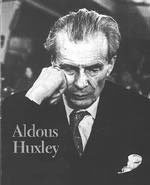 Aldous
Huxley was born on July 26, 1894, into a family that included some of
the most distinguished members of that part of the English ruling
class made up of the intellectual elite. Aldous' father was the son
of Thomas Henry Huxley, a great biologist who helped develop the
theory of evolution. His mother is the sister of Mrs Humphrey Ward,
the novelist; the niece of Matthew Arnold, the poet; and the
granddaughter of Thomas Arnold, a famous educator and the real life
headmaster of Rugby School who became a character in the novel Tom
Brown's Schooldays.
Aldous
Huxley was born on July 26, 1894, into a family that included some of
the most distinguished members of that part of the English ruling
class made up of the intellectual elite. Aldous' father was the son
of Thomas Henry Huxley, a great biologist who helped develop the
theory of evolution. His mother is the sister of Mrs Humphrey Ward,
the novelist; the niece of Matthew Arnold, the poet; and the
granddaughter of Thomas Arnold, a famous educator and the real life
headmaster of Rugby School who became a character in the novel Tom
Brown's Schooldays.
Like the England of his day, Huxley's Utopia possesses a rigid class structure, one even stronger than England's because it is biologically and chemically engineered and psycologically conditioned. And the members of Brave New World's ruling class certainly believe they possess the right to make everyone happy by denying them love and freedom.
His
experiences in fascist Italy, where Benito Mussolini led an
authoritarian government that fought against birth control in order
to produce enough manpower for the next war, also provided materials
for Huxley's bad Utopia, as did his reading of books critical of the
Soviet Union.
It's important to
remember that Huxley wrote BNW in 1931, before Adolf Hitler came to
power in Germany and before Joseph Stalin started the purges that
killed millions of people in the Soviet Union.
He
therefore had no immediate real-life reason to make tyranny and
terror major elements of his story. In 1958 Huxley himself said, "The
future dictatorship of my imaginary world was a good deal less brutal
than the future dictatorship so brilliantly portrayed by Orwell".
( http://www.primenet.com~matthew/huxley/huxbio.html)
2. Theme of Brave New World
Huxley
states its theme as "the advancement of science as it affects
human individuals". Within the last ten years we have seen
tremendous advances in science and technology. In any single ten-year
period since 1900 the advances in science and technlogy have
overshadowed the advancement made during every previous hundred-year
period. Huxley realized that these advances which were almost
universally hailed as progress were fraught with danger. Man had
built higher than he could climb; man had unleased power he was
unable to control.
BNW is Huxley's
warning; it is his attempt to make man realize that since knowledge
is power, he who controls and uses knowledge wields the power.
Science and technology should be the servants of man - man should not
be adapted and enslaved to them. Brave
New World is a description of our lives as they could be in the none
too distant future, if the present
obsessions persist for standarization according to the sciences -
eugenics and psychology, as well as economics and mechanics.
(BNW_Monarch.htm)
3. Science and Technology
Brave
New World is not only a Utopian book, it is also a
scientific-fiction novel. But it does not predict about science in
general. He was more worried about dangers that appeared more obvious
at that time- the possible misuse of biology, physiology and
psychology to achieve communiti, identity, and stability. Ironically,
it becomes clear at the end of the book that the World State's
complete control over human activity destroys even the scientific
progress that gained it such control.
http://www.primenet.com~matthew/huxley/huxbio.html
For sure, Huxley was writing a satirical
piece of fiction, not scientific prophecy. Hence to treat his writing
as ill conceived futurology rather than a work of great literature
might seem to miss the point. Yet the knee-jerk response of "It's
Brave new World!" to any blueprint for chemically-driven
happiness has delayed research into paradise-engineering for all
sentient life. huxley.htm
4. Totalitarian Power
Brave
New World is a benevolent dictatorship: a static, efficient,
totalitarian welfare-state. Society is stratified by
genetically-predestined caste. intellectualy superior Alphas are the
top-dogs. Servile, purposely brain-damaged Gammas, Deltas and
Epsilons toil away at the bottom. The lower orders are necessary in
BNW because Alphas - even soma-fuelled Alphas- could allegedly never
be happy doing menial jobs.
Notionally,
BNW is set in the year 632 AF (After Ford). Yet the society itself
has no historical dynamic: "History is bunk". It is curious
to find a utopia where knowledge of the past is banned to prevent
individous comparisons. One might imagine history lessons would be
encouraged instead. They would uncover a blood-staned horror-story.
Perhaps the controllers fear historical
awareness would stir dissatisfaction with the utopian present. Yet
this is itself revealing. For Brave New World is not an exciting
place to live in. It is a sterile, productivist utopia geared to the
consumption of mass produced goods: "Ending is better than
mending". Society is shaped by a single all-embracing political
ideology. the motto of the world state is "Community, Identity,
Stability".
huxley.htm
5. False Happiness
Brave
New World has come to serve as the false symbol for any regime of
universal happiness.
Huxley implies
that by abolishing nastiness have got rid of the most profound and
sublime experiences that life can offer as well. Most notably, they
have sacrificed a mysterious deeper happiness which is implied, but
not stated, to be pharmacologically inaccesible to the utopians. The
metaphysical basis of this presumption is obscure.
In
BNW, happiness derives from consuming mass-produced goods, sport,
promiscuous sex, "the feelies", and most famously of all, a
supposedely perfect pleasure-drug, soma.
For
a start, soma is a very one-dimensional euphoriant. It gives rise to
only a shallow, unepathetic and intellectually uninteresting
wellbeing. The drug is said to be better than (promiscuous) sex. but
a regimen of soma doesn't deliver anything sublime or life enriching.
It doesn't catalyse any mystical epiphanies, intellectual
breakthroughs or life-defining insights. Insted, it provides a
mindless, inauthentic "imbecile happiness" - a vacuous
escapism which makes people comfortable with their lack of freedom.
( huxley.htm)
The
combination of genetic engineering, bottle-birth, and sexual
promiscuity means there is no monogamy, marriage, or family. "Mother"
and "father" are obscene words that may be used
scientifically on rare, carefully chosen occasions to label ancient
sources of psychological problems.
http://www.primenet.com~matthew/huxley/huxbio.html
6. Brave New World Revisited.
In his introduction to these essays Huxley says, "The subject of freedom and its enemies is enormous, and what I have written is certainly too short to do it full justice, but at least I have touched on many aspects of the problem". In his novel he employs satire to warn mankind; in his essays he emplys reason - having used fiction, he turns now to facts and opinions. Huxley includes comments on overpopulation, overorganization, propaganda, and persuasion, and discusses what can and should be done since "without freedom, human beings cannot become fully human". (BNW_Monarch.htm)
7. George OrwellŽs 1984
Because
Brave New World describes a bad utopia, it is often
compared with George Orwell's 1984, which also describes a
horrible possible world of the future. The world of 1984 is
one of tyranny and terror, and perpetual warfare. Orwell wrote it in
1948, shortly after the Allies had defeated Nazi Germany in World War
II and just as the West was discovering the full dimensions of the
evils of Soviet totalitarianism.
http://www.primenet.com~matthew/huxley/huxbio.html
Admittedly,
BNW enforces a much more benign conformism than Orwell's terrifying
1984. There's no room 101, no torture and no war. Early
child-rearing practices aside, it is not a study of physically
violent totalitrianism. Yet its society is as dominated by caste as
any historical Eastern despotism. BNW recapitulates all Heaven's
hierarchies (recall all those angels, archangels, seraphim, etc.) and
few of its promised pleasures. Its satirical grotesqueries and
fundamental joylessness are far more memorably captured than its
delights - with one pregnant exception, soma. huxley.htm
Academic
year 1998/1999
28.Mayo 1999
© a.r.e.a./Dr Vicente Forés
López
© Mª Teresa Galarza Ballester
Universitat
de València Press

