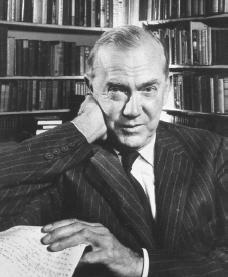
Biography of Henry Grahm
Greene
http
://www.notablebiographies.com/images/uewb_05_img0315.jpg
Henry Graham
Greene,
Greene was born in Berkhamsted, Hertfordshire, the fourth of six
children- his
younger brother Hugh was later to become the Director-General of the
BBC, and
older brother Raymond was an eminent doctor and mountaineer. Their
parents, Charles
Henry Greene and
In 1910,
Charles
Greene succeeded Dr Fry as headmaster of the school, and Graham
attended the
school as a pupil. Bullied and profoundly unhappy as a boarder, Greene
made
several attempts at suicide (some of them purportedly by playing Russian
roulette- though Michael Shelden's biography of Greene persuasively
discredits
the truth of these incidents), and in 1921 at the age of seventeen he
underwent
six months of psychoanalysis in London to deal with depression. After
this he
returned to the school as a day boy, living with his family.
Schoolfriends
included Claud Cockburn and Peter Quennell.
He went to
Early career
After graduation, Greene took up a career in journalism, firstly in
Novels and other works
Greene's first published novel was the man within in 1929, and
its
reception emboldened him to give up his job at The Times and work full-
time as
a novelist. However, the following two books were not successful (Greene
disowned them in later life), and his first real success was Stamboul
train in
1932- as with several of his subsequent books, this was also adapted as
a film
(Orient Express, 1934).
His income from novels was supplemented by freelance journalism,
including book
and film reviews for The Spectator, and co-editing the magazine Night
and Day,
which closed down in 1937 shortly after Greene's review of the film Wee
Willie
Winkie, starring a nine-year-old Shirley Temple, caused the magazine to
lose a
libel case. Greene's review claimed that
His fiction was originally divided into two genres: thrillers or
mystery/suspense books, such as
As his career lengthened, however, Greene and his readers both found the
"entertainments" to be of nearly as high a value as the literary
efforts, and Greene's later efforts such as The Human Factor, The
Comedians,
Our Man in Havana and The Quiet American combine these modes into works
of
remarkable insight and compression.
Writing style
Greene's novels are written in a contemporary, realistic style, often
featuring
characters troubled by self-doubt and living in seedy or rootless
circumstances. The doubts were often of a religious nature, echoing the
author's ambiguous attitude to Catholicism (by the end of his life he
seems to
have lost his faith, but still considered himself a Catholic).
Unlike other "Catholic writers" such as Evelyn Waugh and Anthony
Burgess, Greene's politics were essentially left-leaning, though some
biographers believe politics mattered little to him. In his later years
he was
a strong critic of what he saw as American imperialism, and he
supported the
Cuban leader Fidel Castro, whom he had met.
Travel
Throughout his life, Greene was obsessed with travelling far from his
native
England, to what he called the "wild and remote" places of the world.
His travels provided him with opportunities to engage in espionage on
behalf of
the
"There is so much weariness and disappointment in travel that people
have
to open up- in railway trains, over a fire, on the decks of steamers,
and in
the palm courts of hotels on a rainy day. They have to pass the time
somehow,
and they can pass it only with themselves. Like the characters in
Chekhov they
have no reserves – you learn the most intimate secrets. You get an
impression
of a world peopled by eccentrics, of odd professions, almost incredible
stupidities, and, to balance them, amazing endurances."
- Graham Greene, The Lawless Roads (1939)
Many of his books have been filmed, most notably 1947's Brighton Rock,
and he
also wrote several original screenplays, most famously for the film The
Third
Man.
Trivia
Greene greatly enjoyed parody. In 1949,
when the
New Statesman publication held a contest for parodies of Greene's
distinctive
writing style, he submitted an entry under a pseudonym and won second
prize.
The resulting work, The Stranger's Hand, was later finished by another
writer
and brought to the screen by Italian film director, Mario Soldati. In
1965,
Greene entered a similar New Statesman parody contest, again under a
pseudonym,
and won an honorable mention.
Final years
Greene moved to
October 2004 saw the publication of the third and final volume of The
Life of
Graham Greene by Norman Sherry, Greene's official biographer. The
writing
of this biography created a story in itself in that Sherry followed in
Greene's
footsteps, even coming down with diseases that Greene had come down
with in the
same place. Sherry's work reveals that Greene continued to submit
reports to
British intelligence until the end of his life. This has led scholars
and
Greene's reading public to entertain the provocative question, "Was
Greene
a novelist who was also a spy, or was his lifelong literary career the
perfect
cover?"
http://kirjasto.sci.fi/greene.h
tm
The
books
written by GRAHAM GREENE