INTRODUCTION
Our work is focussed in the Romanticism period, when it was originated, what were its influences and who were its most important authors.
Romanticism was an artistic and intellectual movement that originated in late 18th century Western Europe . In part a revolt against aristocratic, social, and political norms of the Enlightenment period and a reaction against the rationalization of nature, in art and literature it stressed strong emotion as a source of aesthetic experience, placing new emphasis on such emotions as trepidation, horror, and the experience in confronting the sublimity of nature. It elevated folk art , language and custom, as well as arguing for an epistemology based on usage and custom. It was influenced by ideas of the Enlightenment, particularly evolution and uniformitarianism , which argued that "the past is the key to the present", and elevated medievalism and elements of art and narrative perceived to be from the medieval period. The name "romantic" itself comes from the term "romance" which is a prose or poetic heroic narrative originating in the medieval.
The ideologies and events of the French Revolution are thought to have influenced the movement. Romanticism elevated the achievements of what it perceived as misunderstood heroic individuals and artists that altered society. It also legitimized the individual imagination as a critical authority which permitted freedom from classical notions of form in art. There was a strong recourse to historical and natural inevitability in the representation of its ideas.
Romanticism in British literature developed in a different form slightly later, mostly associated with the poets William Wordsworth and Samuel Taylor Coleridge , whose co-authored book " Lyrical Ballads " ( 1798 ) sought to reject Augustan poetry in favour of more direct speech derived from folk traditions. Both poets were also involved in Utopian social thought in the wake of the French Revolution . The poet and painter William Blake is the most extreme example of the Romantic sensibility in Britain . Blake's artistic work is also strongly influenced by medieval illuminated books.
Lord Byron , Percy Bysshe Shelley , Mary Shelley and John Keats constitute another phase of Romanticism in Britain . The historian Thomas Carlyle and the Pre-Raphaelite Brotherhood represent the last phase of transformation into Victorian culture. William Butler Yeats , born in 1865 , referred to his generation as " the last romantics ."
Blake introduces us in his universal world in which he mixed image and text.
Blake's thought begin the English Pre-Romanticism. His life and his work were a fight between Spirit and reality.
The modern critic doesn't accept his agrupations but in English Lyrics there are two generations:
1 st : lakistas poets: Wordsworth y Coleridge.
2 nd : Satanic poets: Lord Byron, Shelley and Keats.
After having done this explanation of the context, having shown the most important authors and their most important themes, we are going to focus our work in the religiosity of the English romantic period.
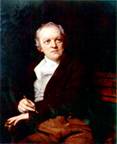
WILLIAM BLAKE
Firstly we are going to analyse the life of a Pre-Romantic, William Blake and his poem The Chimney Sweeper.
William Blake was the first of the great English Romantics, principally because he was the first of the English poets to assault the principles of science and commercialism in an age when the twin imperatives of industrialisation and ‘system' were beginning to dominate human life. He wrote lyrics, vast verse epics and verse dramas. He redefined the poetry of radical protest.
William Blake's significance in the Romantic Movement came late in the 19th century, after what is officially considered the Romantic period.
He was born 1757 in London , his recognition as an artist and poet of worth began when Blake was in his sixties.
Blake's early childhood was dominated by spiritual visions which influenced his personal and working life. A passionate believer in liberty and freedom for all, especially for women, he courted controversy with his views on Church and state.
After following a traditional artistic career as an apprentice engraver he attended the Royal Academy , but he did not take well to the 'stifling' atmosphere and clashed with the ideals of the Academy's founding members, especially Sir Joshua Reynolds.
In 1782 Blake married Catherine Boucher, an inseparable companion he taught to read, write and draw and would aid him in the production of his work.
After leaving the Academy he set himself up as an engraver and illustrator, publishing his own work. His first book, Poetical Sketches , was published in 1783. From then on he published everything himself. He produced his most famous works, Songs of Innocence (1789) and Songs of Experience (1794), by engraving both words and pictures on the same plate, his lasting style.
Although Blake struggled to make a living from his work during his lifetime his influence and ideas are possibly the strongest of all the Romantic poets.
The Chimney Sweeper
When my mother died I was very young,
And my father sold me while yet my tongue,
Could scarcely cry weep weep weep weep.
So your chimneys I sweep and in soot I sleep.
Theres little Tom Dacre. who cried when his head,
That curl'd like a lambs back, was shav'd, so I said,
Hush Tom never mind it, for when your head's bare,
You know that the soot cannot spoil your white hair.
And so he was quiet, and that very night,
As Tom was a sleeping he had such a sight,
That thousands of sweepers Dick, Joe, Ned and Jack
Were all of them lock'd up in coffins of black,
And by came an Angel who had a bright key
And he open'd the coffins and set them all free.
Then down a green plain leaping laughing they run
And wash in a river and shine in the Sun.
Then naked and white, all their bags left behind,
They rise upon clouds, and sport in the wind.
And the Angel told Tom if he'd be a good boy.
He'd have God for his father and never want joy.
And so Tom awoke and we rose in the dark
And got with our bags and our brushes to work.
Tho' the morning was cold, Tom was happy and warm,
So if all do their duty, they need not fear harm.
In the first paragraph we can see how the author focuses the poem in chimney's work and their lives and we also can see that this is the reason for the title of the poem.
W. Blake makes a protest with this poem because he was terrified seeing the bad conditions of chimney sweepers.
In the second paragraph the children “ Tom Dacre ” Looks like an angel. It seems that it is not a general angel, it sounds that he knows who that child is. And another thing that shows that Tom is younger than the reader is the soot cannot spoil your white hair.
In the third paragraph Tom is having a dream. Here he died in black coffins and the only way to be free is death. Here we find a symbolism between dream which usually is during night and the night is dark.
In the fourth paragraph we also can find some green symbols, better said some natural symbols as a garden or the Even. But we also can see the Sun which is to be able to enjoy the nature or to be happy. And if we have a look we can see that the child now is an Angel who is happy.
In the fifth paragraph there are some words like Then naked and white which symbolises that they have all the truths in their backs. Naked refers to going back to their origins and white refers to something clean .
He'd have God for his father and never want joy. That sentence refers that the happiness is never going to be out because he have had a God which was his father.
But in the last paragraph Tom awakes and returns to reality, he has to go to his job but he is happy because he had a beautiful dream where he could see him as an Angel.
WILLIAM WORDSWORTH
Wordsworth,s verdict after Blake's death reflected many opinions of the time: "There was no doubt that this poor man was mad, but there is something in the madness of this man which interests me more than the sanity of Lord Byron and Walter Scott." Blake's influence grew through Pre-Raphaelites all over Britain .
This last statement allows me to introduce the next romantic poet: W.Wordsworth.
William Wordsworth's poems are defined as poems of nature, but in his early life he was dominated by the French Revolution and the libertarian ideals of the time and that was also reflected in some of their poems.
Following this revolutionary ideas, he repudiated not only the Christian faith but also the family and marriage institutions. Narrating Wordsworth's progressed out of the Church to the position of "at least a semi -atheist" (Coleridge's phrase).
Inspired by the French Revolution, he created elements of a new type of poetry, based on the “real language of men” so his poems where written in the language of the common man and talked about real but common situations.
Wordsworth also met Taylor Coleridge and developed a big friendship with him that brought them to produce an important work in the English Romantic movement which name was Lyrical Ballads .
The poem we are going to analyse is a fragment of “The Last of the Flock ” which is included in this volume and talks about a man who has been forced to sell his lambs through poverty and now he feels extremely sad because he has lost his last one.
In this poem we can find the Wordsworth's ideals about religion in this moment and also we can observe that the topic is a story of a common man with a common life. Wordsworth proves with that poem that a normal story can be inspiration to make poetry too.
The Last of the Flock
When I was young, a single man,
And after youthful follies ran.
Though little given to care and thought,
Yet, so it was, a ewe I bought;
And other sheep from her I raised,
As healthy sheep as you might see,
And then I married, and was rich
As I could wish to be;
Of sheep I numbered a full score,
And every year increas'd my store.
Year after year my stock it grew,
And from this one, this single ewe,
Full fifty comely sheep I raised,
As sweet a flock as ever grazed!
Upon the mountain did they feed;
They throve, and we at home did thrive.
--This lusty lamb of all my store
Is all that is alive;
And now I care not if we die,
And perish all of poverty.
Six children, Sir! had I to feed,
Hard labour in a time of need!
My pride was tamed, and in our grief,
I of the parish ask'd relief.
They said I was a wealthy man;
My sheep upon the mountain fed,
And it was fit that thence I took
Whereof to buy us bread:
"Do this; how can we give to you,"
They cried, "what to the poor is due?"
I sold a sheep as they had said,
And bought my little children bread,
And they were healthy with their food;
For me it never did me good.
A woeful time it was for me,
To see the end of all my gains,
The pretty flock which I had reared
With all my care and pains,
To see it melt like snow away!
For me it was a woeful day.
Another still! and still another!
A little lamb, and then its mother!
It was a vein that never stopp'd,
Like blood-drops from my heart they dropp'd.
Till thirty were not left alive
They dwindled, dwindled, one by one,
And I may say that many a time
I wished they all were gone:
They dwindled one by one away;
For me it was a woeful day.
To wicked deeds I was inclined,
And wicked fancies cross'd my mind,
And every man I chanc'd to see,
I thought he knew some ill of me.
No peace, no comfort could I find,
No ease, within doors or without,
And crazily, and wearily
I went my work about.
Oft-times I thought to run away;
For me it was a woeful day.
Sir! 'twas a precious flock to me,
As dear as my own children be;
For daily with my growing store
I loved my children more and more.
Alas! it was an evil time;
God cursed me in my sore distress,
I prayed, yet every day I thought
I loved my children less;
And every week, and every day,
My flock, it seemed to melt away.
They dwindled. Sir, sad sight to see!
From ten to five, from five to three,
A lamb, a weather, and a ewe;
And then at last, from three to two;
And of my fifty, yesterday
I had but only one,
And here it lies upon my arm,
Alas! and I have none;
To-day I fetched it from the rock;
It is the last of all my flock.
In this poem we can see how the man blames God of his tragedy:
Alas! it was an evil time;
God cursed me in my sore distress
Perhaps he can't understand why the church didn't want to help him to keep his Flock which was the only way to earn money in his family.
The flock was his happiness, and when all his lambs died his happiness died with them too. He lost the love he had to his children and his hatred to God and the Church increased for making him unhappy. He feels completely sad and desperate.
Another still! and still another!
A little lamb, and then its mother!
It was a vein that never stopp'd,
Like blood-drops from my heart they dropp'd.
Till thirty were not left alive
They dwindled, dwindled, one by one
The desperation is reflected in the repetitions like still and still another , they dwindled ,dwindled one by one and other expressions like Alas! and For me it was a woeful day . The last one is repeated along the poem.
In our opinion, that can be a critic to the Church because they were more interested in the monarch instead of the common people during the French Revolution.
Around 1880 the intellectual and political ideas of Wordsworth changed to become conservative. The poet was disappointed with the events in France and also changed his social circle.
Some students of this topic like Robert.M Ryan argue that “ Wordsworth does not later abandon his radical views, but rather accommodates them to the importance of public religion in the national life.”
SAMUEL TAYLOR COLERIDGE
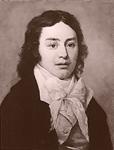
The next poet is of course Samuel Taylor Coleridge
Limbo
The sole true something – This! In Limbo Den
It frightens Ghosts as Ghosts here frighten men –
For skimming in the wake it mock'd the care
Of the old Boat-God for his Fathering Fare;
Tho' Irus' Ghost itself he ne'er frown'd blacker on,
The skin and skin-pent Druggist crost the Acheron,
Styx , and with Puriphlegeton Cocytus, --
(The very names, methinks, might thither fright us --)
Unchang'd it cross'd -- & shall some fated Hour
Be pulveris'd by Demogorgon's power
And given as poison to annilate souls --
Even now It shrinks them! They shrink in as Moles
(Nature's mute Monks, live Mandrakes of the ground)
Creep back from light – then listen for its sound; --
See but to dread, and dread they know not why --
The natural Alien of their negative Eye.
‘Tis a strange place, this Limbo! – not a Place,
Yet name it so; where Time & weary space
Fettered from light, with night-mair sense of feeling,
Strive for their last crepuscular half-being; --
Lank space, and scytheless Time with branny hands
Barren and soundless so the measuring sands,
Not mark'd by flit of shades, -- unmeaning they
As moonlight on the dial of the day!
But that is lovely – looks like Human Time, --
An Old Man with a steady look sublime,
That stops his earthly Task to watch the skies;
But he is blind – a Statue hath such eyes; --
Yet having moon-ward turn'd his face by chance,
Gazes the orb with moon-like countenance,
With scant white hairs, with foretops bald & high,
He gazes still, -- his eyeless Face all Eye; --
As ‘twere an organ full of silent sight,
His whole Face seemed to rejoice in Light!
Lip touching lip, all moveless, bust and limb,
He seems to gaze at that which seems to gaze on him!
No such sweet sights doth Limbo Den immure,
Wall'd round and made a Spirit-jail secure,
By the mere Horror of blank Naught-at-all,
Whose circumambance doth these Ghosts enthral
A lurid thought is growthless, dull Privation,
Yet that is but a purgatory curse;
Hell knows a fear far worse,
A fear – a future fate. –‘This positive Negation.
As we can see in this poem, Coleridge uses a religious term, the Limbo to create his own world of loss, desire, fragmentation and melancholia.
Coleridge's latest poetry reflects the poet's ability to imagine and dissect both sides of life's grand antagonisms. Here we see that he places the world or the situation he wants to create nor in the hell neither in the heaven, he uses the Limbo in order to see the two sides in one. In fact, the definition of Limbo is: The abode (neither heaven nor hell) of the souls of anabaptized pagans and infants. (2)Trapped in his opium's addiction and depression, the older Coleridge felt chronically incomplete, confused, dissatisfied. This melancholy state brought him to the curious frontier where no one achieves double vision, the capacity to perceive two sides of the world at once. Although this double refraction kept Coleridge from finding peace, the psychic Limbo became a muse, an inspiration to complete works on the impossibility of completion.
Seeing a little analysis of the poem, we can see that the first part shows us a terrible image of the Limbo, and describes the Limbo as The sole true something – This! (3), so nothing concrete. Here we contemplate that the poet uses mythological names that might thither fright us . (4)
The middle part begins so: ‘Tis a strange place, this Limbo! –not a Place Yet name it so; -- ( 5) and describes us a world based on the empty space and almost death, or as the poet says unmeaning (6). Nevertheless, he also says: But that is lovely – looks like Human Time, --. So we can discover the comparison between the Limbo, the terrible world that he describes (but look, not as terrible as the hell), and the true life (human time) (7). And here can we see the way the poet was: melancholic, depressed and opium's addict. Suddenly appears in the poem an old blind man who guesses the moonlight (Could this man be God? The old loved God who now has forgotten Coleridge? Maybe he is angry with God and he has placed Him in the Limbo, as a way of punishment?)
In the third part he shows us the Limbo as a place where reigns the mere Horror of blank Naught-at-all , (8) so the fear is the hopeless of the empty, the nothing. The poem ends so: This positive Negation. (9) Maybe here ha wants to express the duality of the things, the two sides that he sees, because can the negation be positive?
In conclusion, this poem reflects the two sides of the things that he can see and he has situated it in a religious context, because maybe he blames Got of his melancholic life. Perhaps he feels as in the Limbo, where nothing has reason, an empty space where he does not find himself.
GEORGE GORDON NOEL BYRON, LORD BYRON

Lord George Gordon Byron (1788-1824), has been considered as one the members of "the big six" of English romantic literature. Although Byron is appointed to a specific group, as we are going to deal with the theme of religion, we will see that Byron has his own religion perspective as each of the rest of “the big six”.
An outline of Byron's biography will try to draw a clear explanation of how he has gone through several religious influences. And on the other hand, with the aim to summarize how he achieved his own ideology, different extracts from different works of Byron has been used to explain how he sees the traditional beliefs from that period.
George Gordon Byron, 6th Baron Byron, was born in London in 1788 and died in Missonlonghi ( Greece ) in 1824. Right from the very beginning of his life, Byron presented a contradiction between what religion dictates the morally correct Christian behaviour and the story of his life, which has been featured extravagant living; according to Lady Caroline Lamb, who kept a tempestuous affair with Lord Byron, he is "mad, bad, and dangerous to know”. However George Ticknor, described him as "gentle, mannerly, natural, affectionate, and modest." George Gordon Byron was both things, opposite values and attitudes in a single person: cruel and kind, cynic and idealist, always covering opposite extremes.
The poet spent his early years with his mother in Aberdeen . There he attended ten years to a grammar school, and according to the International Byron Society, “ where he was afflicted with ten years of Calvinist indoctrination, which, he claimed, instilled in him an ineradicable conviction that he was damned. A malformation of the right calf and ankle, which could not be cured, and gave him a limp, confirmed in his mind the idea that he was set apart for unusual punishment.”
Influences from Calvinism continued appearing during the following years in the life of Byron. At the age of nine, his mother assigned to him a Calvinist nursemaid called Mary Gray, who introduced the Bible and at the same time, it has been rumoured that the nursemaid herself awoke Byron's sexual inclinations. This controversial situation has always been present in Byron's life, on the one side we have the established social religion, and on the other side the sex, the scandals, the divorce and many other aspects in life that could be seen as sins, or not accepted socially.
From 1805 to 1807, Byron studied in Cambridge University where the education was given from Anglican priests. According to the Biography of George Gordon Byron by E.H Coleridge, “ Cambridge did him no good.”The place is the devil," he said.” And as the International Byron Society states, Cambridge was for Byron, “ a hotbed of cant, obfuscation and hypocrisy ”. As we can observe, throughout the years, Byron starts to acquire a more subversive attitude towards religion.
Regarding to Childe Harold's Pilgrimage, it is a quite autobiographical poem, as Byron freely admitted, and is based upon his travels through the Mediterranean and Aegean Sea . Here we have a stanza collected from the Canto Four where Byron describes how the main character was tormented:
XXXIV
Or, it may be, with demons, who impair
The strength of better thoughts, and seek their prey
In melancholy bosoms, such as were
Of moody texture, from their earliest day,
And loved to dwell in darkness and dismay,
Deeming themselves predestined to a doom
Which is not of the pangs that pass away;
Making the sun like blood, the earth a tomb,
The tomb a hell, and hell itself a murkier gloom.
Byron's mood at that time is exactly what he describes in these verses “ with demons, who impair / The strength of better thoughts, and seek their prey” . The evil is always present, and in a way, spoiling the good. Byron was tormented “ with demons ” in his real life as Childe Harold in the poem. Again we have the opposition between good and bad, a controversial attitude that will find a terrible destiny “ Deeming themselves predestined to a doom” , the idea of “ineradicable conviction that he was damned”, mentioned before, takes shape in this stanza.
In Cain, the subversive attitude and his conflict towards traditional religion evolve to a stronger position. According to Edward E. Bostetter (“ Byron and the Politics of Paradise”) “ He uses the biblical cosmos as the setting for the first act, superimposes upon it in the second act the cosmos of 19th century scientific speculation, and in the third act returns to the biblical cosmos. By so doing he shows up the inadequacy of the traditional cosmology at the same time as he reveals its continuing power over the minds of men. ”
Act 1, scene 1 from “Cain”
"What had I done in this? I was unborn." Besides, wasn't Jehovah guilty of entrapment: "The tree was planted, and why not for him [Adam]? / If not, why place him near it, where it grew, / The fairest in the center?" In any event, why proscribe knowledge and life: "How can both be evil?"
Cain puts the blame on his parents to have eaten the forbidden fruit, a course that is going to hand down from generation for generation. Cain did not provoke the original sin; instead he has inherited the course of being a mortal human. On the other hand, he accuses “ Jehovah guilty of entrapment ” as the tree was deliberately planted in the Paradise of Eden to lead them into crime.
Cain is an individual who is fighting against the social and religious convention as Byron does. The clash existed in the 19 th century between Romantics as Byron and the traditional understanding of religion starts here. The questioning of a society dictated by social and religious rules is more emphasized at this point near to the modern times. Byron acts as a kind of rebel defying the society and its faith.
“In hope to merit heaven by making earth a hell” by George Gordon Byron (from Childe Harold's Pilgrimage, Canto I, stanza 15)
PERCY BYSSHE SHELLEY
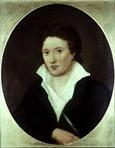
Another one if the Big Six (name given to the six big poets of the Romantic Period, including William Blake) is Percy Bysshe Shelley.
He was born in 1792 in Horsham , Sussex and died in 1822 in Italy while sailing in the Bay of Spezia . He came from an aristocratic family, so he entered to study philosophy at Oxford University in 1810.
After just one year at University, he wrote “ The Necessity of Atheism ” with Thomas Jefferson Hogg and therefore, he was expelled from University. The same year, he eloped with 16-year-old aristocratic girl called Harriet with whom, he had two children. They both travelled through Britain .
After Harriet's suicide, Shelly married Mary Godwin and moved to Italy with their own three children. It was there when he published most of his works. (We can notice here the tendency of most of the romantics to establish in exotic places such as Italy , France , Scotland …)
His life was usually encouraged by his desire of social and political reforms, for that, he offered an emotive and passionate appeal to the social improvement of society although he caused scandal with his views on religion and his love life.
The extract that we are going to analyze is part of the poem “ Queen Mab ”, which was first published in a limited edition of 250 copies intended for individuals chosen by Shelley. For him, poetry had to be spontaneous, an unconscious creativity, a need of the individual to express his feelings. He talks to the Queen Mab, (character that we'll see in Romeo and Juliet by William Shakespeare) the queen of the fates who allows him to see the mistakes committed by human being and the future of the world. In this Romantic period, we'll find a lot of these visions of future as the individual is not happy with the present.
It is a youthful poem of political protest which attacks the main institutions of society by means of which the people are oppressed: law, marriage, war, commerce, established religion, the fraudulent rhetoric of power and privilege. The power of the individual is essential in the Romantic thinking. He believed that the perfect society would not come by violent acts but by people becoming virtuous by evolution. In this sense, he was an idealist encouraged by his youth (he was just 21 years old).
"Spirit of Nature! all-sufficing Power,
Necessity! thou mother of the world!
Unlike the God of human error, thou
Requir'st no prayers or praises; the caprice
Of man's weak will belongs no more to thee (1)
Than do the changeful passions of his breast
To thy unvarying harmony: the slave,
Whose horrible lusts spread misery o'er the world,
And the good man, who lifts with virtuous pride
His being in the sight of happiness (2)
That springs from his own works; the poison-tree,
Beneath whose shade all life is wither'd up, (3)
And the fair oak, whose leafy dome affords
A temple where the vows of happy love
Are register'd, are equal in thy sight:
No love, no hate thou cherishest; revenge
And favouritism, and worst desire of fame (4)
Thou know'st not: all that the wide world contains
Are but thy passive instruments, and thou
Regard'st them all with an impartial eye,
Whose joy or pain thy nature cannot feel,
Because thou hast not human sense,
Because thou art not human mind. (5)
• The “ Spirit of nature ” stands for God. He claims God to see the world he has created. How it has developed because of the “ human error ”. We can see his protestant ideas in the sense that “ thou requir'st no prayers or praises ”. The autonomous dialogue with God is enough and the existence of prayers or praises is just the result of “ man's week ”. There is no need to pray.
• The religion is the cause because of the man is not happy. The “ lust spread misery o'er the world ”. That notes an entire unbelief in religion of any sort.
• The man must get free from mad: “ the poison-tree ” which rules the world: “ beneath whose shade all life is wither'd up ”. This process will bring them into paradise.
• The ideal state would be the one in which equality and freedom would exist; it is represented by the “ fair oak ”, a world with no social classes and full of love: “ A temple where the vows of happy love are register'd, are equal in thy sight ”. Freedom meant more than ever as they were almost like slaves. To fight for freedom meant a lot for people. We can find here the spirit of French Revolution (Liberté, Egalité, Fraternité). We see also the presence of nature as the state represented by the “ fair oak ” or the mad by the “ poison-tree ”.
• But that state is unreal, it would exist only in the imagination. God can't feel the human suffering because he is not one of them, he does not really exist and can't do anything to solve problems in the world: “ Whose joy or pain thy nature cannot feel”
JOHN KEATS
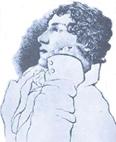
Keats was one of the most important figures of early nineteenth-century Romanticism, a movement that showed emotion, imagination, and the beauty of the natural world. Many of the ideas and themes in Keats's great odes are Romantic concerns: the beauty of nature, the relation between imagination and creativity, the response of the passions to beauty and suffering, and the transience of human life in time.
As we have been reading in different poems, we notice how worried he was about death and what remains after it, and the most important for him was to gain Eternity. But not mention of God, Heaven or passing to a better life.
Here is an example of fear to death, in his sonnet:
When I have fears that I may cease to be
When I have fears that I may cease to be
Before my pen has glean'd my teeming brain,
Before high piled books, in charactry,
Hold like rich garners the full-ripen'd grain;
When I behold, upon the night's starr'd face,
Huge cloudy symbols of a high romance,
And think that I may never live to trace
Their shadows, with the magic hand of chance;
And when I feel, fair creature of an hour,
That I shall never look upon thee more,
Never have relish in the faery power
Of unreflecting love; -- then on the shore
Of the wide world I stand alone, and think
Till Love and Fame to nothingness do sink.
When reading this poem, we really appreciate the fear to death, the author regrets not having time to write down his thoughts” And think that I may never live to trace their shadows ”, he realises that his death would occur before he could complete his writings and above all, that nothing matters when you die “ then on the shore Of the wide world stand alone, and think Till Love and Fame to nothingness do sink”.
The expressive agony in the face of death it is once again in this poem
“Why did I laugh Tonight” where we can appreciate the themes of fear, loneliness and despair characteristic on his poetry
Why did I laugh tonight? No voice will tell.
Why did I laugh tonight? No voice will tell:
No god, no demon of severe response,
Deigns to reply from heaven or from hell.
Them to my human heart I turn at once_
Heart! Thou and I are sad alone;
Say, wherefore did I laugh? O mortal pain!
O darkness!darkness! ever must I moan,
To question heaven and hell and heart in vain!
Why did I laugh? I know this being's lease_
My fancy to its utmost blisses spreads:
Yet could I on this very midnight cease,
And the world's gaudy ensigns see in shreds.
Verse, fame and beauty are intense indeed,
But death intenser_death is life's high meed.
The poet makes a question, this rhetoric question is: why did he laugh that night? But nobody answers; neither any god nor demon can answer it. He has not any help by god or demon. It is the first time he addresses to any god, for help and it is in vain, he is suffering, feeling a strong pain because he could die in that very moment and the only thing that probably remains would be his verses.
There is an internal struggle which causes him pain and makes him moan in the dark, during the night. Probably is the fear to death, because is in the darkness when he moans, and usually the death comes during the night. However he does not know the reason and makes the question again and again, three times in total, probably to reinforce the idea that he is sad and alone and has any reason to laugh.
Keats puts profound meaning into this poem, his interior fight let us see his feelings, it could happen that in that night he “cease”, he pass away, but in what sense?, here we notice that on the one hand, this word might enclose the meaning of “death”. He fears the death, he feels pain and sorrow because of the transitory life and could cease in that midnight.
But on the other hand, he could “cease” referring to writing, and he is referring to that idea through musical verses, it seems a litany, a lament. As he is a poet, for him Art, the poetry, is very important, Art and death are both escapes from time and change, and the relation between art, death and life, not a happy life but a lonely and sad one, is the true theme of the poem. As it is of the “Ode on a Grecian Urn”:
...
Thou, silent form, dost tease us out of thought
As doth eternity: Cold Pastoral!
When old age shall this generation waste,
Thou shalt remain, ind mist of other woe
Than ours, a friend to man, to whom thou say'st,
“beauty is truth, truth is beauty, - that is all
Ye know on earth, and all ye need to know”
But here Art represents the escape from change and decay into eternity, and it will be the only thing that shall remain, the rest will disappear. The piece of art, the Grecian Urn is symbol of the timeless, of the escape from the world.
Another good example of the desire to escape of this world, which is sad for Keats is in these stanza, an extract from the poem “ Ode to a Nightingale ”:
...
Fade away, dissolve, and quiet forget
What thou among the leaves hast never known,
The weariness, the fever, and the fret
Here, where the men sit and hear eachother groan;
Where palsy shakes a few, sad,last gray hairs ,
Where youth grows pale, and spectre-thin, and dies;
Where but to think is to be full of sorrow
And leaden-eye despairs;
Where beauty cannot keep her lustrous eyes,
Or new Love pine at them beyond tomorrow.
For Keats, the real world is sad, a hostile environment “Here, where the men sit and hear each other groan ;”, where humans are summated to change from youth to old age till they pass away: “ youth grows pale, and spectre-thin, and dies ”, and thinking about it makes him stay in such a desperate state, asking those repetitive questions as in the first poem we were dealing with.
It is “ Verse, Fame and Beauty ” three important things in life, the Art of Literature and the Fame it carries if the writing is beautiful. But the poet situates “ Death ” above all these things, and as a culmination of Life.
CONCLUSION
After having analysed these romantic authors we can say that they all share the ideals of their time. They form a kind of rebellious group who denounce the human conditions and problems caused by Industrial Revolution, which was quite developed in England .
They want a utopic state which is reflected in their poems by meanings of dreams or desires inspired by French Revolution.
This rebellion takes also place in their own spirits. They all have an internal struggle between good and madness and want to escape from religious conventions. For example, Wordsworth and Shelley share atheism.
So, religion has a very important rule in the Big Six's poetry becoming an essential element in Romantic ideals.
BIBLIOGRAPHY
WILLIAM BLAKE
• http:// www.bbc.co.uk/williamblake
• http://www.bbc.co.uk/arts/romantics/blake_chimney_sweeper.shtml
• http://www.artehistoria.com/frames.htm?http://www.artehistoria.com/hist oria/contextos/2474.htm
• http://www.online-literature.com/blake
• http://www.kirjasto.sci.fi/wblake
WILLIAM WORDSWORTH
• www.rc.umd.edu/reviews/back/ryan
• www.bbc.co.uk/arts/romantics
SAMUEL TAYLOR COLERIDGE
• Robert M. Ryan , The Romantic Reformation: Religious Politics in English Literature, 1789–1824 . Cambridge Studies in Romanticism
• www.rc.umd.edu/reviews/back/ryan
• www.bbc.co.uk/arts/romantics
LORD BYRON
• http:// www.internationalbyronsociety.org/
• A life of Byron
• Works of Byron
• http://engphil.astate.edu/gallery/BYRON11.HTML
• Biography of George Gordon Byron by E. H. Coleridge published in The Encyclopedia Britannica , 1905 (Scanned and edited by Jeffrey D. Hoeper, May, 1999)
• http://www.eclectica.org/v6n3/sloan.html
• Lord Byron: The Demons of Calvinism by Gary Sloan
• George Byron, 6th Baron Byron from Wikipedia
• http://www.online-literature.com/quotes/
• http://www.bartelby.com/65/ro/romantic.html
• http://www.wwnorton.com/nto/romantic/welcome.htm
• http://www.internationalbyronsociety.org/
• http://engphil.astate.edu/gallery/BYRON11.HTML
• http://www.poetseers.org/the_romantics
• http://www.bbc.co.uk/arts/romantics
PERCY BYSSHE SHELLEY
• http://www.bbc.co.uk/arts/romantics/shelley_queen_mab.shtml
• www.rc.umd.edu/reviews/back/ryan
• www.bbc.co.uk/arts/romantics
JOHN KEATS
• The Norton Anthology. English Literature. Sixth Edition volume 2. W.W. Norton &company. New York . London.
• The new Pelican guide to English literature edited by Boris Ford. 5 From Blake to Byron. Penguin books.
• A critical History of English Literature. Volume IV. David Daiches. Second edition. London.Secker & Warburg.
• http://www.englishistory.net/keats/contents/.html
• http://en.wikipedia.org/wiki/John_Keats
• http://www.bartelby.com/65/ro/romantic.html